

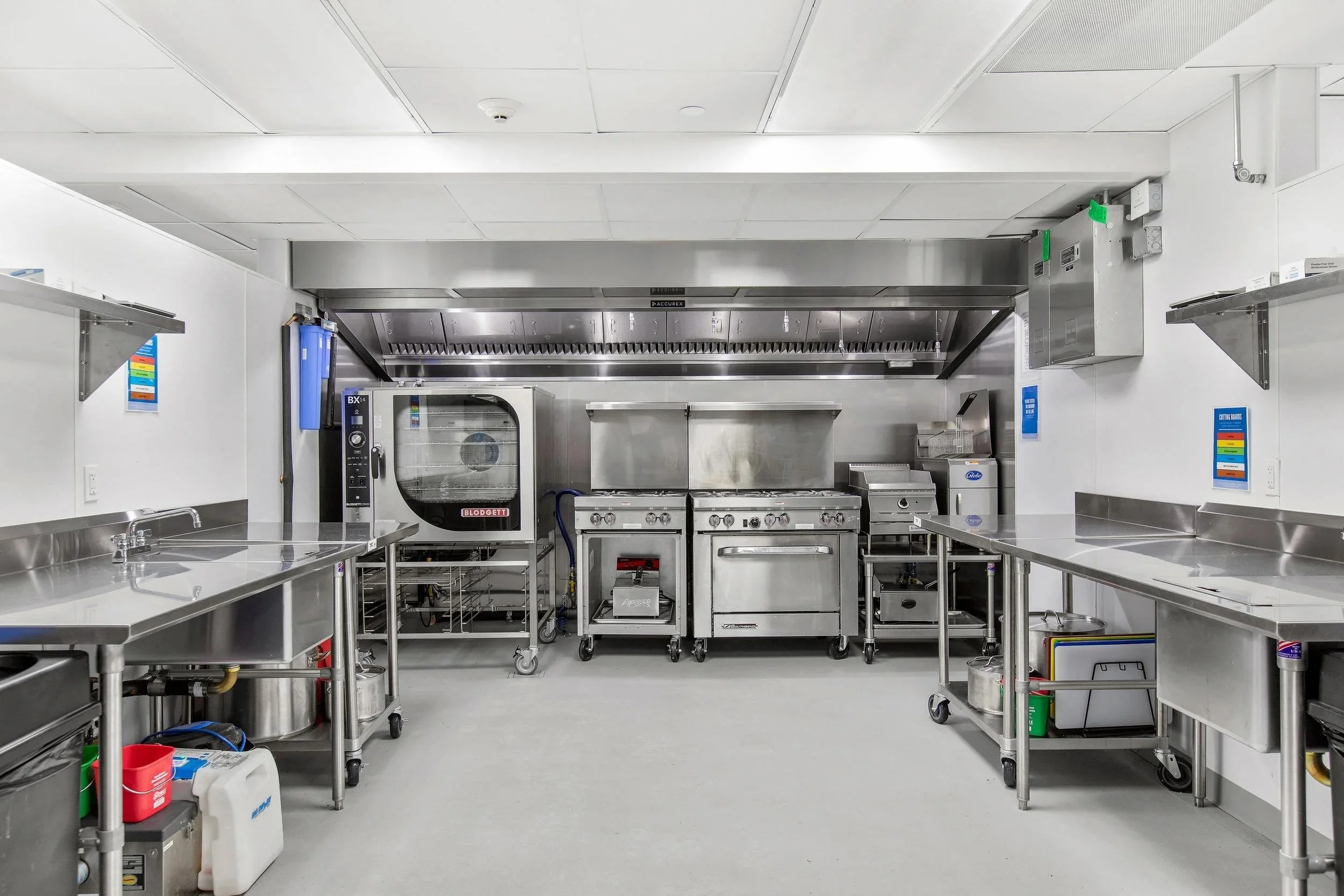
How Much Does It Cost to Rent a Commercial Kitchen? A Practical Guide for Food Entrepreneurs
If you're planning to start a catering business, launch a packaged food brand, or increase your bakery's production, one question is likely at the top of your list: How much does it cost to rent a commercial kitchen?
The answer depends on several factors, including your location, equipment needs, storage requirements, and how frequently you plan to use the space.
For many independent food businesses, renting a shared commercial kitchen offers a way to access professional equipment without investing in a private production facility.
But before comparing rental prices, it's important to understand what you're actually paying for.
What Is a Shared Commercial Kitchen?
A shared commercial kitchen is a professionally equipped food preparation facility used by multiple independent food businesses.
Instead of leasing an entire building, renters reserve kitchen time or enter into membership agreements based on the facility's operating model.
Shared commercial kitchens are commonly used by:
Caterers preparing meals for private events
Bakers producing larger batches
Food truck operators needing approved preparation facilities
Small-batch packaged food producers
Chefs developing new products or menus
Entrepreneurs transitioning from home-based production
Depending on the kitchen, renters may have access to commercial ovens, preparation tables, refrigeration, storage, and specialized equipment.
A shared kitchen can also help businesses manage production without the long-term financial commitment of opening a restaurant.
What Determines Commercial Kitchen Rental Costs?
Commercial kitchen rental rates vary significantly. There is no single standard hourly rate that applies to every facility.
Here are the main factors that influence pricing.
1. Location
Commercial kitchens in high-cost urban areas may have different operating expenses than facilities in smaller communities.
However, rent alone should not determine your decision.
A lower-priced kitchen located far from your suppliers, delivery routes, or customers may increase transportation expenses and reduce your available production time.
2. Rental Schedule
Some commercial kitchens offer hourly rentals, while others use monthly memberships, minimum-hour packages, or longer-term agreements.
If you only need a kitchen for occasional production, hourly access may be practical.
If you're preparing food several days each week, a membership or recurring arrangement may offer more predictable costs.
3. Equipment
Consider whether the kitchen includes the equipment you need.
A bakery may prioritize oven capacity, mixers, cooling racks, and preparation surfaces.
A caterer may need reliable refrigeration, cooking equipment, and enough workspace to prepare multiple dishes simultaneously.
A food producer may require specific equipment for packaging, labeling, or batch preparation.
Always confirm which equipment is included and whether additional fees apply.
4. Storage
Some kitchens offer refrigerated, frozen, or dry storage.
Storage can be valuable when your business requires ingredients or supplies to remain at the facility between production sessions.
Ask whether storage is included in the rental agreement or charged separately.
5. Cleaning and Other Fees
Before comparing prices, find out whether the quoted rate includes utilities, sanitation supplies, waste disposal, equipment use, and cleaning.
You should also review minimum booking periods, cancellation policies, and charges for additional time.
The cheapest advertised rate is not always the lowest total cost.
How to Calculate Your Monthly Kitchen Rental Budget
Rather than relying on a general average, estimate how many hours your business actually needs.
For example, suppose a small bakery schedules three production sessions per week, with four hours per session.
That equals 12 hours per week.
Using an illustrative rental rate of $30 per hour:
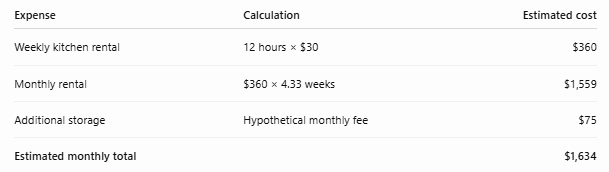
These are hypothetical figures to demonstrate budgeting, not published rates for Lila's Commercial Kitchen or a local market average.
Your actual costs will depend on the facility's pricing and agreement.
Calculate Cost Per Product
Knowing your monthly rental cost is useful, but understanding how it affects your products is even more important.
If the bakery produces 600 sellable items per month, a $1,634 kitchen and storage expense equals approximately $2.72 per item.
That cost must be considered alongside ingredients, packaging, labor, transportation, and overhead.
Improving production efficiency can help reduce your kitchen cost per unit.
How to Get More Value From Your Rental Hours
Commercial kitchen rental becomes more economical when your production schedule is organized.
Here are five practical ways to make better use of booked time.
Plan Production Before Arriving
Prepare a written production schedule that identifies recipes, ingredient quantities, equipment requirements, and expected batch yields.
Confirm which preparation tasks can legally and safely be completed before your session, and which must occur in the approved facility.
Group Similar Tasks Together
If multiple products require the same equipment or ingredients, schedule them together when possible.
For example, a bakery might prepare products with similar oven temperatures in consecutive batches to reduce equipment adjustments.
Standardize Your Recipes
Use consistent measurements and documented production procedures.
Standardized recipes help control ingredient costs, maintain quality, and estimate how much kitchen time each batch requires.
Monitor Actual Production Time
Record the time required for setup, preparation, cooking, cooling, packaging, and cleanup.
After several sessions, you'll have a clearer picture of how much time to reserve.
Review Your Schedule Regularly
If you're consistently finishing early or running overtime, adjust your booking schedule.
Small improvements in production planning can make a meaningful difference over time.
Questions to Ask Before Renting a Commercial Kitchen
Before choosing a commercial kitchen for your food business, ask:
What is the hourly rate or membership structure?
Is there a minimum number of rental hours?
Which equipment is included?
Is refrigerated, frozen, or dry storage available?
Are cleaning supplies, utilities, and waste disposal included?
What permits and insurance must renters provide?
Can the facility accommodate my production process?
How far in advance must kitchen time be reserved?
What happens if I need to cancel or extend a session?
Can I increase my rental hours as my business grows?
These questions help you evaluate the overall value of a facility rather than choosing solely on price.
Is Renting a Commercial Kitchen Better Than Building Your Own?
For an established business with high production volume and specialized requirements, a private kitchen may eventually make financial sense.
However, a shared commercial kitchen can be particularly useful when your business is still growing.
Renting can reduce the need to purchase major commercial equipment, build out a dedicated facility, and maintain an entire kitchen independently.
It also allows entrepreneurs to test demand before committing to larger fixed expenses.
The right decision depends on your production volume, available capital, required equipment, and long-term business plans.
Looking for a Commercial Kitchen in Port Townsend, Washington?
At Lila's Commercial Kitchen, we provide a shared, professionally equipped kitchen for independent food entrepreneurs.
Our Port Townsend facility supports food makers looking for a practical place to prepare products, develop their businesses, and connect with a community of fellow entrepreneurs.
Kitchen rental fees depend on your time, equipment, and membership needs, so the best starting point is a conversation about your operation.
Tell us what you're making, how often you need kitchen access, and what equipment your business requires.
Explore Lila's Commercial Kitchen membership or contact us to discuss rental options.