

How to Start a Food Business in Washington State: A Practical Guide for 2026
Have a recipe everyone keeps asking you to sell? Maybe you bake for friends, prepare meals for family gatherings, or dream of opening a catering business. Turning that passion into a food business is exciting, but there is more to getting started than creating a menu and finding customers.
In Washington State, food entrepreneurs need to understand business licensing, food safety regulations, production costs, and where they are legally allowed to prepare food for sale.
The good news is that you don't necessarily need to open a restaurant or invest in your own commercial kitchen to get started.
Whether you're planning a bakery, catering service, packaged food brand, or food truck, this guide explains the steps to building a food business in Washington State.
1. Decide What Type of Food Business You Want to Start
Before applying for permits or buying equipment, define what you plan to sell and how customers will purchase it.
Common food business models include:
Home-based bakery: Producing eligible baked goods and other approved foods from a residential kitchen.
Catering business: Preparing meals for weddings, corporate events, and private gatherings.
Food truck or mobile food business: Serving customers from a permitted mobile food unit.
Packaged food business: Producing products such as sauces, baked goods, snacks, or specialty foods for retail or wholesale.
Pop-up food business: Selling prepared food at markets, festivals, or temporary events.
Each model has different operational and licensing requirements.
For example, selling shelf-stable cookies directly to customers may qualify under Washington's Cottage Food Program. Preparing refrigerated meals for delivery or producing packaged foods for wholesale generally involves a different regulatory pathway.
Start by answering three questions: What will you sell? Where will you prepare it? Who will buy it?
These decisions will influence nearly every other step.
2. Understand Washington State Food Business Permits
One of the most important steps in starting a food business is identifying which permits apply to your operation.
Cottage Food Permit
Washington's Cottage Food Program allows eligible entrepreneurs to prepare certain low-risk foods in their primary residential kitchen.
Approved product categories can include certain baked goods, candies, jams, dry spice blends, and dry tea blends.
According to the Washington State Department of Agriculture (WSDA), the program currently has these requirements:
A $355 application fee
A permit valid for two years
A maximum of $35,000 in annual gross cottage food sales
Direct-to-consumer sales only, with no wholesale resale
Product eligibility and labeling requirements
Not every homemade food qualifies. Foods requiring refrigeration for safety, for example, generally fall outside the program.
A Cottage Food Permit also applies to the approved home kitchen, not a rented commercial kitchen.
Food Service Permits
Businesses preparing or serving meals to the public, including caterers, restaurants, and mobile food vendors, may need permits from their local health department.
The required approvals depend on the operation, menu, equipment, and service model.
In Jefferson County, food entrepreneurs should confirm their requirements with Jefferson County Public Health before beginning production or making major equipment investments.
Food Processor License
If you plan to manufacture or package food for sale through grocery stores, retailers, or other wholesale channels, you may need a WSDA Food Processor License.
This can apply to businesses producing packaged baked goods, sauces, specialty foods, and other processed products.
Important: Renting a licensed commercial kitchen does not automatically license your individual food business. Your operation must still obtain its own applicable approvals.
3. Register Your Business and Complete Food Safety Training
Once you've identified your food business model, review the applicable business registration and licensing requirements.
Depending on your structure and location, this may include registering your business, obtaining a Washington State business license, and securing any required local endorsements.
You should also understand Washington's food worker training requirements.
Food workers who handle unpackaged food, utensils, equipment, or food-contact surfaces generally need a valid Washington State Food Worker Card.
The Washington State Department of Health lists the card fee at $10 and identifies foodworkercard.wa.gov as the authorized online training provider.
Food safety training covers essential practices such as proper handwashing, temperature control, preventing cross-contamination, and safe food handling.
These practices protect your customers and help establish consistent production standards.
4. Choose Where You Will Prepare Your Food
Your production space affects how efficiently your business operates and which products you can legally make.
For many new entrepreneurs, there are three main options.
Home Kitchen
A residential kitchen may work for eligible cottage food businesses operating within Washington's program requirements.
However, the program limits the types of products and sales channels permitted.
Your Own Commercial Kitchen
Building or leasing a private commercial kitchen provides more control over equipment, scheduling, and production.
It can also involve significant expenses, including rent, equipment, construction, utilities, maintenance, and inspections.
Shared Commercial Kitchen
A shared commercial kitchen allows independent food businesses to use professional kitchen facilities without taking on the full cost of establishing their own space.
Depending on the facility, renters may have access to commercial cooking equipment, preparation areas, refrigeration, storage, and scheduled kitchen time.
This can be particularly useful for caterers, small-batch producers, bakers, and entrepreneurs testing new products.
At Lila's Commercial Kitchen in Port Townsend, food entrepreneurs can explore membership in a shared, professionally equipped kitchen designed to support independent food businesses.
Learn about becoming a kitchen member at Lila's Commercial Kitchen.
5. Calculate Your Startup Costs Before Setting Prices
A common mistake among first-time food entrepreneurs is calculating only ingredient costs.
Your selling price also needs to account for the expenses involved in preparing and delivering each product.
Consider this hypothetical example of a small-batch food product:
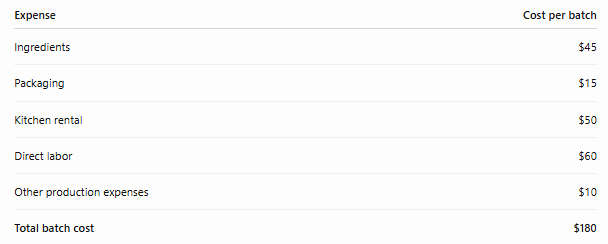
If the batch produces 30 sellable items, the production cost is $6 per item.
Selling each item for $8 would leave only $2 per item before other expenses such as marketing, insurance, administrative work, and taxes.
This is why knowing your numbers matters.
A basic pricing formula is:
Unit cost = Total production cost ÷ Number of sellable units
Then determine a selling price that covers overhead and provides a sustainable profit margin.
6. Test Your Product Before Expanding
You don't need a 20-item menu to launch a successful food business.
Starting with a focused product range makes it easier to manage ingredients, production time, quality, and customer feedback.
Consider testing three to five products before expanding.
Track which products sell consistently, which generate repeat purchases, and which require too much preparation time relative to their selling price.
Pay attention to feedback about flavor, portion size, packaging, and value.
The goal is to build a repeatable operation, not simply produce something people enjoy once.
7. Build a Local Customer Base
For food entrepreneurs in Port Townsend and surrounding Jefferson County communities, local relationships can play an important role in early growth.
Depending on your permits and business model, consider reaching customers through farmers markets, approved pop-up events, catering partnerships, local retailers, and direct online orders.
Create a Google Business Profile if your business is eligible, maintain accurate contact information, and use clear product photography.
Your website and social media should answer basic customer questions: What do you sell? Where can people buy it? How much does it cost? How do they place an order?
Consistent information makes it easier for interested customers to take the next step.
8. Know When It's Time to Move Into a Commercial Kitchen
Your home kitchen or current production arrangement may eventually limit your growth.
Signs that it's time to explore a commercial kitchen include:
You need equipment or preparation space that your current kitchen cannot provide.
You want to expand into products or sales channels that require a different license.
Your production schedule is becoming difficult to manage.
You need a more consistent environment for larger batches.
You are ready to explore catering, packaged food production, or other commercial opportunities.
Before signing a rental agreement, confirm that the facility can accommodate your products, equipment, scheduling needs, and required regulatory approvals.
Take the Next Step With Lila's Commercial Kitchen
Starting a food business involves more than a great recipe. It requires a clear business model, safe production practices, realistic pricing, and a kitchen that supports your goals.
At Lila's Commercial Kitchen in Port Townsend, we believe food entrepreneurs deserve a practical place to develop their ideas and grow.
Whether you're testing your first product or preparing to expand an established business, our shared commercial kitchen offers a place to explore what's possible.
Ready to learn more about commercial kitchen rental in Port Townsend?
Explore kitchen membership at Lila's Commercial Kitchen or contact our team to discuss your food business and kitchen needs.